

Projects
Play Playground
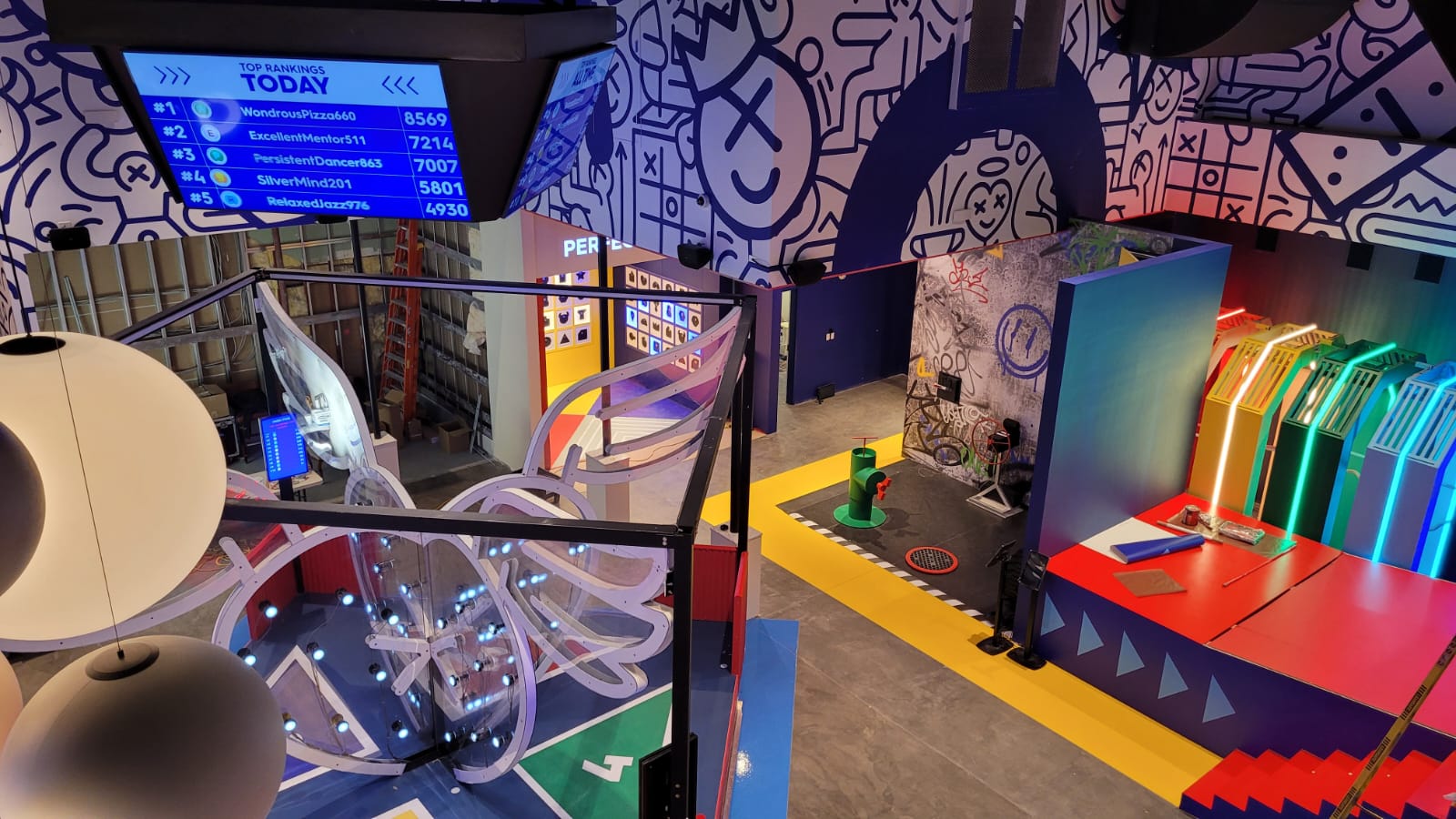
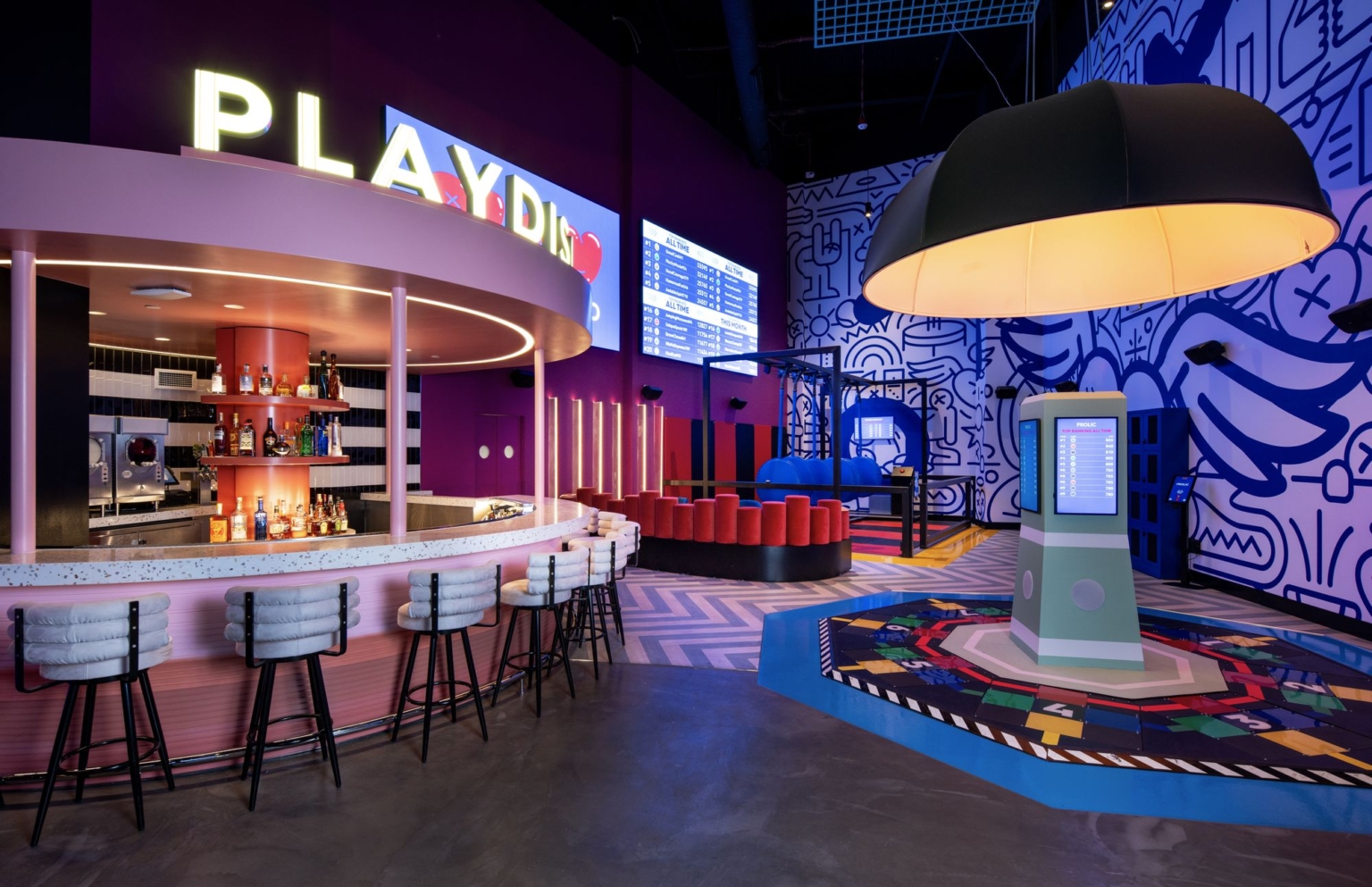
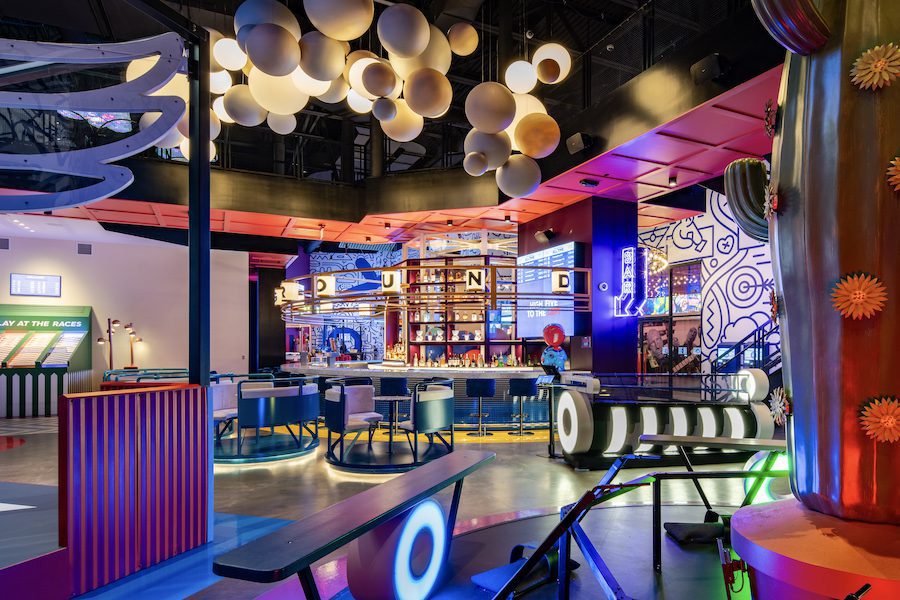
Hailed as the "most playful bar in Las Vegas", Play Playground called on us to design, fabricate and integrate interactive games suited for an adult playground.
Client: Play Playground
Location: Luxor Hotel and Casino, Las Vegas
Spatial Aesthetics and Visual Concept: Bishop
Game Concept Co-Creation, Engineering, Fabrication and Installation: Production Theory
Service: TheoryLab



Creating Seven Original Games for a Permanent Attraction
Play Playground brings larger-than-life physical games into a social entertainment environment inside the Luxor Hotel and Casino. Production Theory helped turn that ambition into a collection of seven original games, combining custom fabrication with sensors, lighting and software integration.
Bishop established the aesthetics and visual concept of the surrounding space. Production Theory co-created the game concepts and handled the engineering, fabrication and installation of the games themselves. Through TheoryLab, our team developed how the physical equipment would behave, how players would interact with it and how those interactions would connect with the attraction’s software and integrated leaderboard.
The brief required games that were fun, competitive and built for permanent public use. Delivering that experience meant resolving the mechanics, electronics and fabrication together, with extensive development behind each interaction.
Physical Play Supported by Complex Technology
The game collection called for a broad range of sensing technologies, including accelerometers, soundwave sensors, proximity sensors and RFID. Metal fabrication, millwork and integrated LEDs formed the physical environments around those systems.
Thousands of hours of research and development went into making the games function and communicate with software. A physical action needed to produce the intended response, with the equipment and electronics working together consistently throughout play.
Our scope included Perfect Popper, Ringer Run, Doctor! Doctor!, High Five and Stomp It, alongside smaller games without sensor integration. Each required its own approach to gameplay, construction and interaction.
Perfect Popper
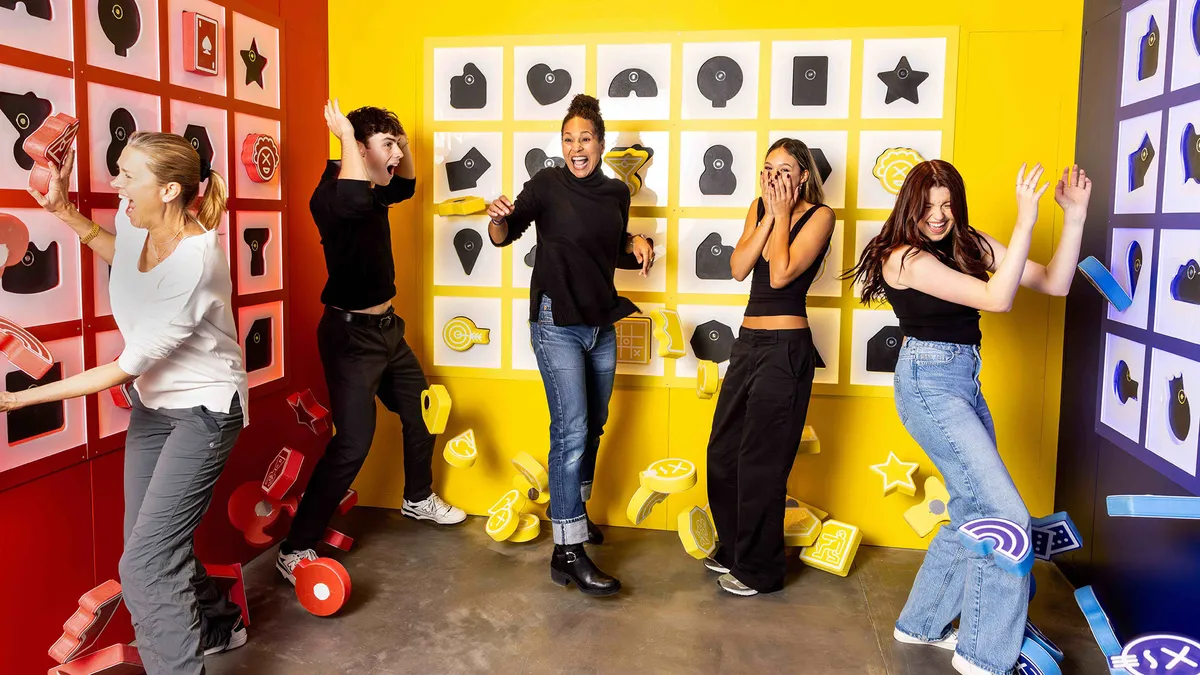
Perfect Popper challenges players to place shapes into their matching positions before time runs out. Behind that straightforward task is a highly technical assembly combining electromagnetic technology, piece detection and an extensive LED wiring system.
Production Theory developed the physical apparatus and integrated the systems that detect a piece in position and illuminate the corresponding space. The relationship between the game pieces, sensing and lighting was central to the experience: players needed a clear response to their actions as they worked against the clock.
The build demonstrates the depth of development required to make a physical game feel intuitive. Its visible interface is simple to understand, while its operation depends on coordinated mechanical, electrical and software systems.
Games That Test Coordination and Reaction
Ringer Run asks players to guide a ring along a twisting course without touching the sides. Production Theory incorporated soundwave sensor technology into the game’s development, connecting the physical challenge with its interactive systems.
Doctor! Doctor! brings players together to reassemble a larger-than-life character. Our work incorporated proximity sensing and RFID technology to support the relationship between the physical pieces and the game’s response.
High Five tests reaction speed by prompting players to strike illuminated targets. Together with Stomp It and the other games in our scope, these experiences show the range of physical interactions developed for the venue—from controlled movement and careful placement to fast reactions.
Prototyping for Real-World Use
Durability was a starting point for development. A permanent attraction has to accommodate repeated play and the different ways guests may handle, strike or interact with its equipment.
Our prototyping process focused on safety, functionality and durability while preserving the fun and competitive character of each game. We used the apparatus in ways we anticipated guests might use it, including high-stress testing intended to expose weaknesses before installation.
That process helped connect fabrication decisions with actual gameplay. The physical construction, sensing systems and interactive responses all needed to work together under the demands of public use. Testing the complete experience was an essential part of developing the finished games.
From Concept to Delivery
Play Playground took 12 months from concept development to opening. Once concepting was complete, Production Theory had five months to build and deliver the games, making the production timeline the project’s largest challenge.
The scope brought together custom fabrication, electronics, sensor integration and installation across seven original games. Each had different technical requirements, with UL-listed components used throughout the complete game assemblies.
Our involvement extended through installation at the Luxor, bringing the developed game systems into their permanent setting.
Original Games Built for a Shared Experience
The completed collection gave Play Playground a range of physical challenges centered on coordination, reaction, teamwork and competition. Production Theory’s contribution connected original game development with the fabrication and technical integration required to make those experiences work in a permanent attraction.
For TheoryLab, the project demonstrates the ability to carry an interactive concept through extensive research, prototyping and production into a finished game that guests can physically engage with.
Key Services Provided
- Game Concept Development: Co-creating seven original games for the attraction.
- Gamification: Developing physical interactions and integrating them with game software and the leaderboard.
- Research and Development: Thousands of hours of prototyping, technical development and testing.
- Engineering and Sensor Integration: Incorporating electromagnetic technology, accelerometers, soundwave sensors, proximity sensing and RFID.
- Custom Fabrication: Producing game apparatus through metalwork, millwork and integrated LED systems.
- Durability Testing: Evaluating equipment under anticipated guest interactions and high-stress use.
- Installation: Installing the completed games within the permanent Luxor attraction.



© 2026 Production Theory. All Rights Reserved.