
Choosing the Right Brand Storytelling Company for Your Business
A strong brand story has to work in the real world, not just in a presentation. Learn what to look for in a brand storytelling company, with examples from Super Bowl LVIII, LEGO and Cirque du Soleil projects that turned brand stories into experiences people could step into.
November 13, 2026

Brian Chapin
A strong brand story does more than explain what your business offers. It communicates what makes your company different, creates meaningful connections with your audience, and gives people a reason to remember you. For businesses investing in trade shows, brand activations, and immersive environments, that story must translate into more than words on a page.
Choosing the right brand storytelling company means finding a partner that can connect strategic thinking with creative execution and real-world experiences. Here's what to consider before making your decision.
1. Why Brand Storytelling Matters for Modern Businesses
A brand story isn't only what a company says about itself. It's what people experience when they meet the brand in person, and that's where a story either holds together or falls apart.
At a live event, for example, your story might come to life through exhibit architecture, interactive displays, product demonstrations, and carefully designed visitor experiences. Each element should communicate a clear message rather than simply compete for attention.
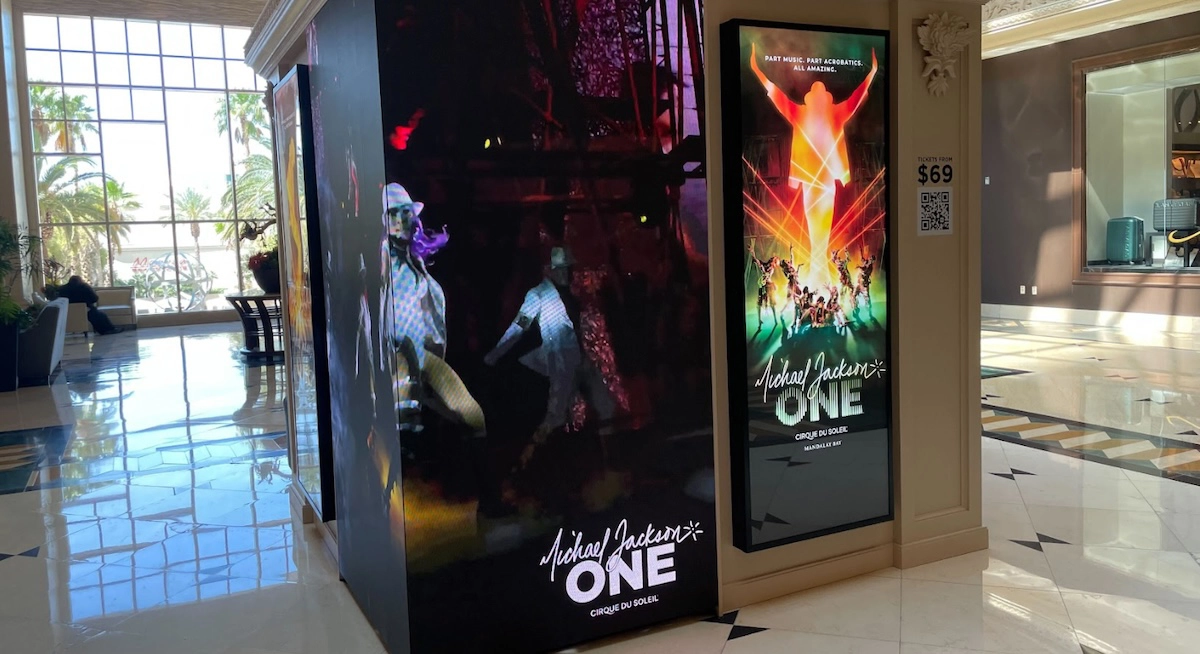
A story can also follow audiences beyond its original setting. For MJ ONE by Cirque du Soleil in Las Vegas, Production Theory fabricated a custom interactive kiosk, designed by Company 8, that carried the show's experience beyond the stage through guest interaction and integrated technology. The story didn't end when the curtain came down.
2. Define Your Brand Storytelling Goals First
Before evaluating potential partners, determine what you want your storytelling efforts to accomplish. Are you introducing a new product, increasing brand awareness, attracting qualified leads, or creating a more engaging customer experience?
Your objectives influence everything from creative direction to spatial design. Establishing measurable goals early also gives you a framework for evaluating the project's success.
3. Look for a Company That Understands Your Brand
The right partner should take time to understand your audience, industry, competitive position, and brand identity before proposing creative concepts.
Look for a company that asks thoughtful questions about your business rather than immediately presenting a predetermined solution. Your brand story should reflect your actual values and differentiators, not simply follow the latest design trends.
Understanding the audience is just as important as understanding the brand. When Super Bowl LVIII came to Las Vegas, Production Theory designed and fabricated VIP environments for On Location, creating bespoke spaces for some of the most exclusive and discerning guests at the event. For that audience, the story was told through uncompromising design and precision execution. Anything less would have undercut the experience the brand promised.
4. Evaluate Their Creative and Strategic Capabilities
Effective storytelling requires both imagination and a clear strategy. A capable partner should connect audience insights, messaging, visual communication, and physical experiences into a cohesive approach.
An experience design lab can be especially valuable when your project involves experimentation, prototyping, or translating an ambitious concept into a tangible environment. Exploring ideas before full-scale production can reveal opportunities and identify practical challenges early.
At Production Theory, that work happens in TheoryLab, the custom research, engineering and game development side of our business. For Kit Kat, TheoryLab designed, fabricated and gamified a set of dunk tanks for an Overwatch esports competition at L.A. Live. A familiar game became a crowd-driven brand moment, the kind of idea that only works when the mechanics are engineered to perform in front of a live audience.
5. Review Their Portfolio and Past Work
Examine previous projects for more than visual appeal. Consider whether each experience communicates a recognizable message, supports a business objective, and encourages meaningful audience interaction.
Look for versatility across trade show exhibits, experiential environments, and brand activations. Ask how the company approached the original challenge, what role it played in execution, and what the client hoped to achieve.
Roles can vary widely from project to project, so ask. On some Production Theory projects, such as Super Bowl LVIII and the Kit Kat Dunk Tanks, we handled both design and fabrication. On others, like the MJ ONE kiosk, we fabricated a concept developed by a creative partner, and on LEGO @ F1 we shared design with XD Agency. All are valid models. What matters is knowing which one a company is showing you.
6. Consider Their Approach to Audience Engagement
Memorable storytelling invites participation. Interactive displays, hands-on demonstrations, immersive installations, and thoughtfully designed visitor journeys can help audiences connect with a brand.
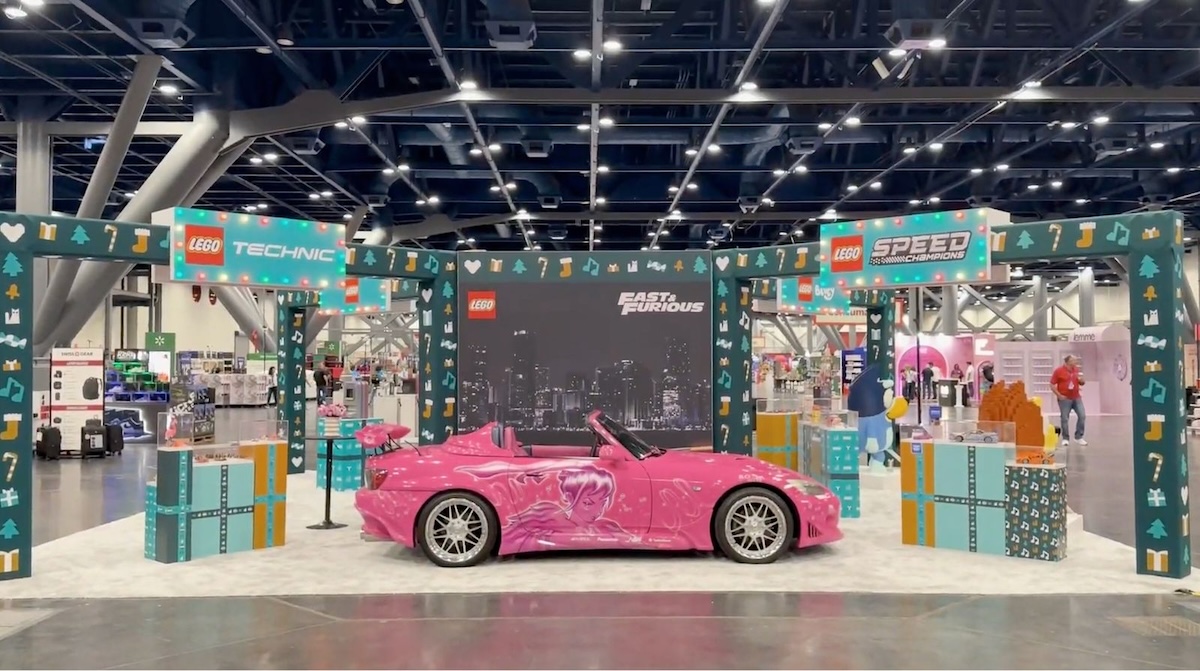
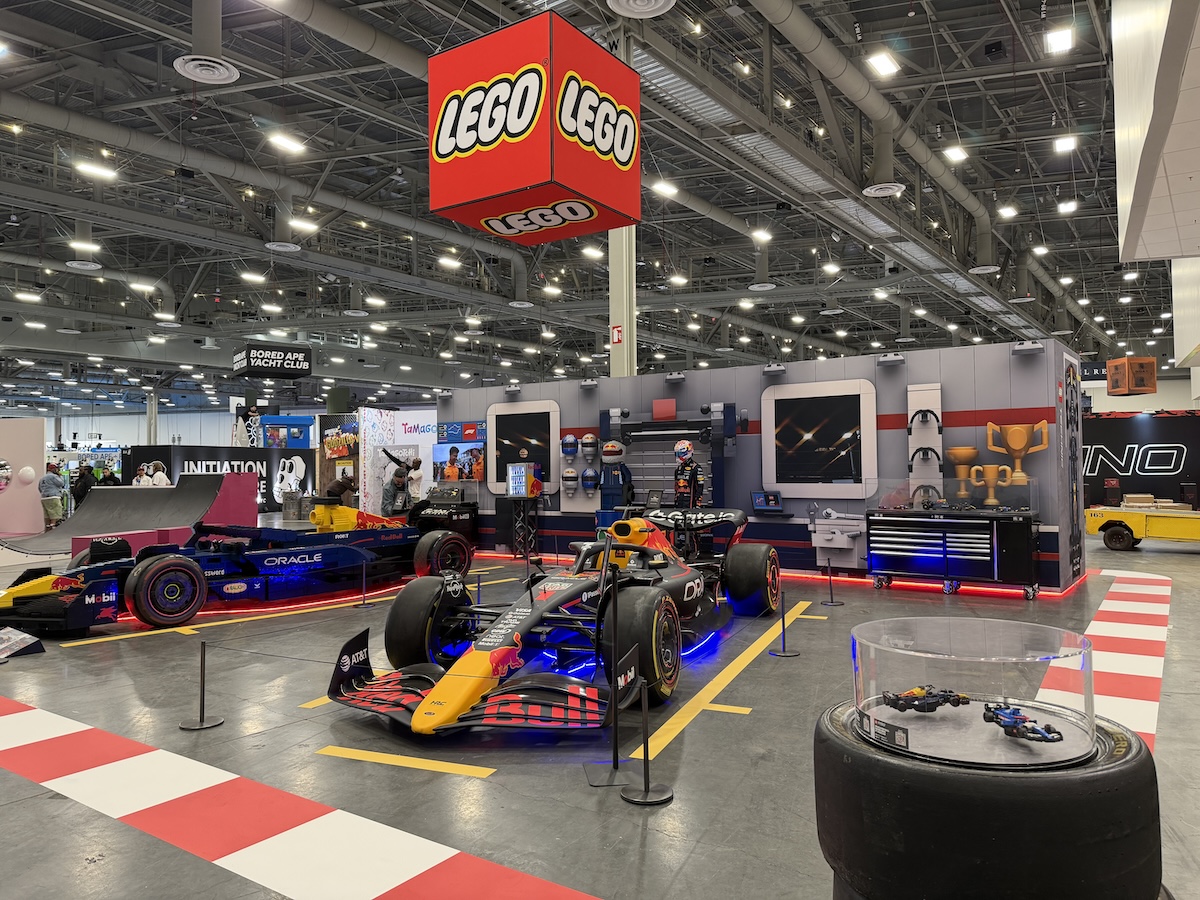
When LEGO and Formula 1 launched their partnership, Production Theory and XD Agency created a five-city tour built around a "build-and-race" experience. Guests engineered their own LEGO F1 cars, then put them to a speed test. The story of the partnership, engineering and racing, was told through what fans did, not what they read.
The right partner should explain how these elements serve your audience and objectives. Creativity matters, but engagement should have a purpose.
7. Assess Communication and Project Management
Even the strongest concept requires careful coordination. Ask how the team manages timelines, budgets, revisions, fabrication, installation, and communication with other vendors.
A partner that understands both design and production can help bridge the gap between an appealing concept and a finished experience that works in the real world. That coordination matters even more when a story travels. A multi-city tour like LEGO @ F1 has to deliver the same experience in every location, which means the build, logistics, and on-site setup all have to be planned together.
8. Questions to Ask Before Hiring a Brand Storytelling Company
Before committing, ask prospective partners:
• How will you learn about our brand and audience?
• How will you connect creative concepts to our business goals?
• Can you manage design, fabrication, and installation?
• What was your exact role on the projects in your portfolio?
• Do you have the in-house engineering to prototype interactive ideas?
• How will you measure the experience's effectiveness?
• How do you handle unexpected production challenges?
The answers can reveal whether a company offers strategic collaboration or simply creative deliverables.
Build a Brand Story People Can Experience
The best brand storytelling makes your business recognizable, meaningful, and memorable. Production Theory brings creative ambition into the physical world through experiential design, custom fabrication, trade show environments, and brand activations.
If your next project needs to communicate more than a message, explore Production Theory's experiential design capabilities and discover how thoughtful design can turn your brand story into an experience people remember.
Brian Chapin
SEE MORE ABOUT AUTHOR



Follow Us

